Utomata
An instrument for field-based computation.
#Fields compute.
~Formations project.
render.
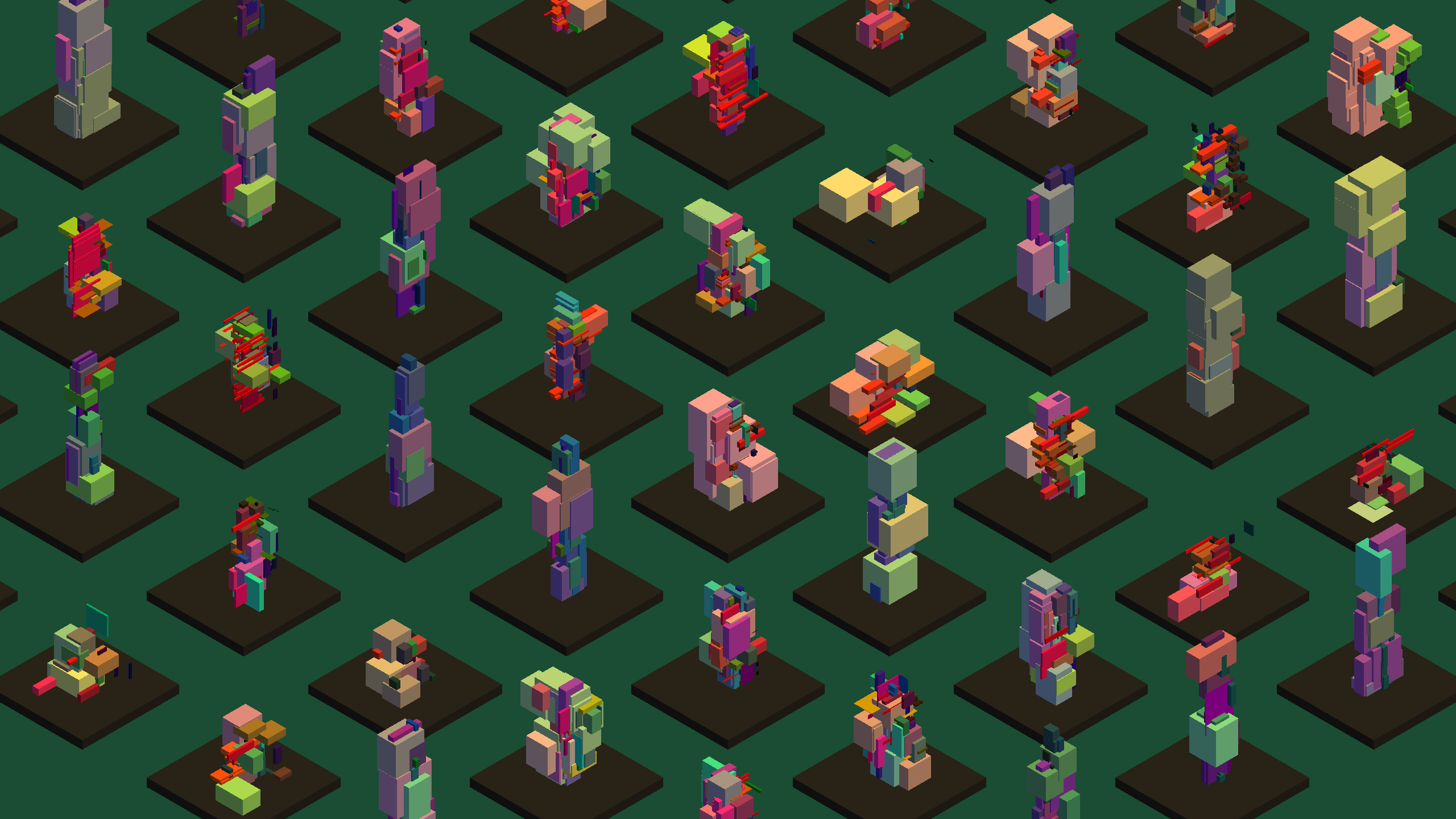
Utomata runs parallel systems of interacting units that update as you type.
Explore procedural and emergent systems
Utomata’s field-based computational model can enact — and combine — a wide range of algorithms.
Run hardware accelerated experiments
Explore large parallel systems in realtime, test behavior quickly, and run simulations at high update rates.
Make systems, not software.
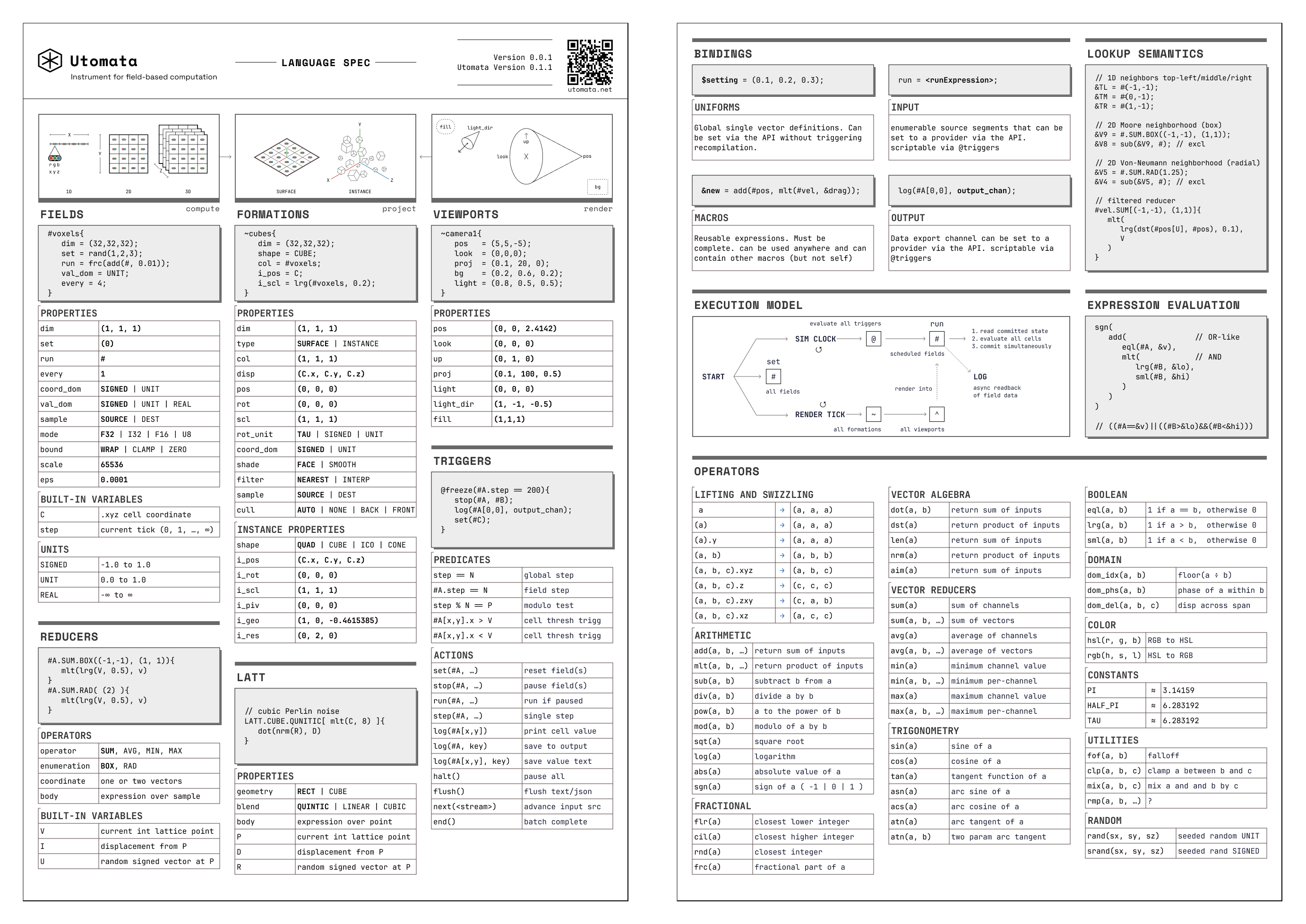
Programs are tiny. And the entire language fits in a single A4 spread.
Batch your work offline
Deterministic and scriptable. Automate experiments, explore seeded systems, sweep parameters, import and export structured run data.
Share your work online
Utomata works anywhere WebGPU is available. Export a project as a standalone webpage or publish it on uto.run.
Status
The Utomata JavaScript/WebGPU library is scheduled for open source release under MPL 2.0 on 1 January 2027.
The desktop authoring environment is in public beta and available from the Download page.
Utomata is in active development. Pull requests are not currently accepted; bug reports, questions and feedback are welcome.